
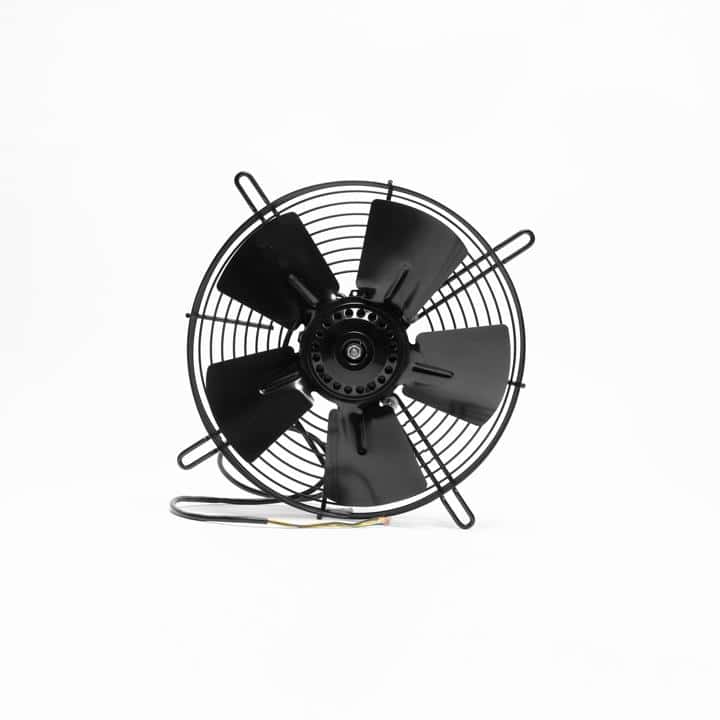
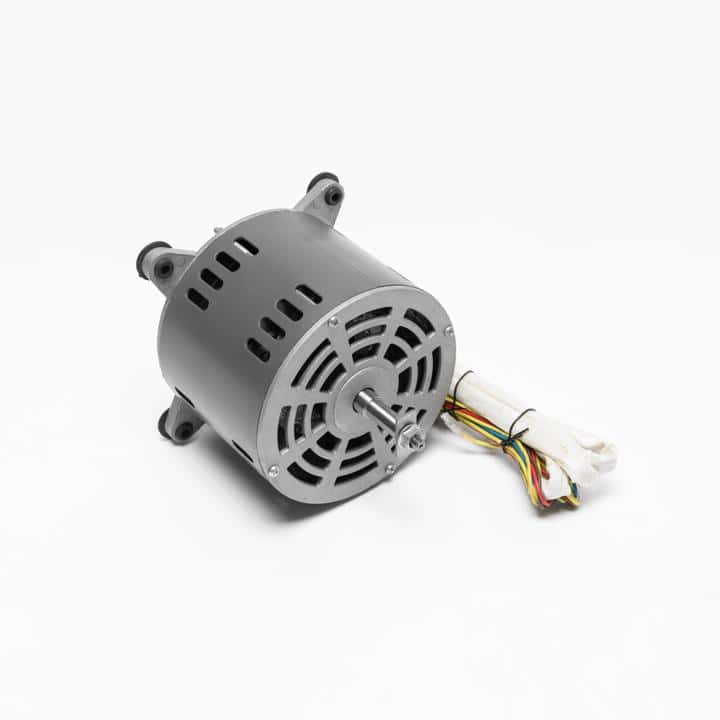
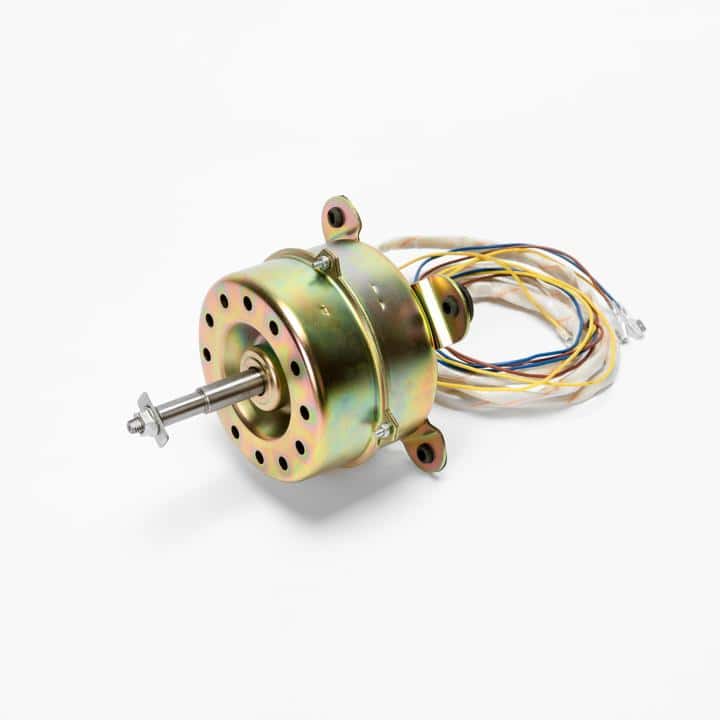
A fan motor is the electric motor that drives a fan blade or impeller assembly. It converts electrical energy into rotational motion and has a direct effect on airflow, speed, efficiency, noise, and overall system reliability.
In practice, selecting a fan motor is not simply a matter of making the fan rotate. The motor has to match the application, load profile, power supply, control method, and operating environment. When the match is right, the system runs more efficiently and more reliably. When it is not, problems such as noise, overheating, unstable speed, or unnecessary maintenance often follow.
What Is a Fan Motor?
A fan motor is used in equipment designed to move air. Depending on the application, it may be installed in a small residential unit, a commercial ventilation system, or a larger industrial air-handling setup.
Many fan systems use induction motors because they offer a practical balance of simplicity, reliability, and cost. In other cases, engineers choose EC or brushless designs when higher efficiency or more precise speed control is needed. For that reason, “fan motor” is better understood as an application category than as one single motor design.
At a basic level, the motor’s role is straightforward: it provides stable rotational output while meeting the fan system’s requirements for airflow, pressure, noise, duty cycle, and energy consumption.
Common Fan Motor Types
Fan motors can be grouped in several ways, but the most useful starting point is usually power supply and control method.
Single-phase fan motors
Single-phase motors are commonly used in smaller fan systems where only single-phase power is available. Typical examples include residential ventilation units, small appliances, light commercial systems, and compact air-moving equipment.
In general, these motors are simple, cost-effective, and suitable for lower-power applications. Many of them use capacitor-start or capacitor-run arrangements to support starting performance and stable operation.
Three-phase fan motors
Engineers more commonly use three-phase motors in commercial and industrial applications such as HVAC equipment, ventilation systems, blowers, and industrial cooling systems because these applications often require higher output, better efficiency, and smoother operation.
Compared with single-phase designs, three-phase motors typically provide more stable power delivery and are better suited for continuous-duty environments. As a result, they are often the preferred choice in larger systems where operating reliability and long-term efficiency matter more.
AC and EC fan motors
In many current fan systems, the comparison is not only single-phase versus three-phase, but also conventional AC motor versus EC motor.
AC fan motors remain widely used because they are proven, familiar, and practical across many installations. By contrast, EC fan motors are often selected when efficiency, speed modulation, and part-load performance carry more weight.
The right choice depends on the application. A straightforward ventilation duty may favor simplicity and reliability, while a variable-airflow system may benefit more from higher-efficiency electronic control.
Where Fan Motors Are Used
Fan motors are used wherever a system needs to generate, maintain, or control airflow. Common applications include:
- residential ventilation equipment
- commercial HVAC systems
- air handling units
- condenser and evaporator fan systems
- industrial cooling equipment
- exhaust and make-up air systems
- process ventilation
- dust extraction and air circulation equipment
Although the operating principle is simple, real-world operating conditions vary widely. For example, a motor used in a quiet indoor ventilation unit is selected differently from one used in a dusty factory environment or a rooftop commercial system exposed to weather and temperature swings.
That is why application context matters just as much as motor rating.
What Affects Fan Motor Selection?
A good selection process usually starts with the system requirement, not the motor catalog.
Power and airflow demand
The motor has to match the actual fan duty. Required airflow, pressure rise, impeller characteristics, and system resistance all influence the load the motor will see.
Voltage and power supply
The available supply helps determine whether a single-phase or three-phase solution makes more sense. It also affects starting method, control options, and installation complexity.
Speed requirements
Some fan systems run at fixed speed, while others need adjustable speed for airflow control, efficiency, or noise reduction. In variable-demand systems, the motor and control method need to support stable speed adjustment across the required operating range.
Efficiency
Efficiency matters more in systems that run for long hours. Even relatively small efficiency differences can have a noticeable effect on operating cost over time, especially in commercial and industrial ventilation applications.
Noise
In many fan applications, the motor is not the only source of noise, but it still plays an important role. Motor design, speed stability, mounting, and control method can all influence acoustic performance.
Operating environment
Temperature, dust, humidity, and installation conditions should all be considered. A motor that performs well indoors in a controlled environment may not be the right fit for a harsher installation.
Maintenance expectations
Some applications prioritize lower upfront cost. Others place more value on longer service life, stable performance, and reduced maintenance intervention. That balance should be clear before the motor is specified.
Why the Control Method Matters
In many fan systems, the control method matters almost as much as the motor itself.
When airflow demand changes throughout the day, variable speed control can improve energy performance and reduce unnecessary operating stress. In these cases, engineers should evaluate the motor together with the drive or control architecture rather than treat it as an isolated component.
This is one reason fan motor selection has become more application-specific. Engineers no longer choose only by frame size and rated power. They also look at control strategy, operating profile, and efficiency target.
Considerations for Canadian HVAC and Ventilation Projects
For Canadian projects, environmental conditions often deserve more attention during motor selection.
Low ambient temperatures can affect starting behavior and material performance. Seasonal variation can also change ventilation demand significantly across the year. In addition, commercial and industrial teams often evaluate these systems with close attention to operating cost, which makes efficiency and controllability more important.
For these applications, it is usually worth checking:
- low-temperature operating conditions
- moisture and dust exposure
- speed-control requirements
- efficiency expectations over long operating hours
- suitability for the actual HVAC or ventilation duty
These factors do not change the core selection logic, but they do make early application review more important.
Final Thoughts
Fan motors may look like basic components, but they play a central role in airflow performance, energy use, and system reliability.
The most effective way to select one is to start with the application: airflow demand, power supply, speed requirement, efficiency target, and operating environment. From there, it becomes much easier to decide whether a single-phase, three-phase, AC, or EC solution makes the most sense.
When the application and motor characteristics are aligned early, the rest of the system design usually becomes much more straightforward.