
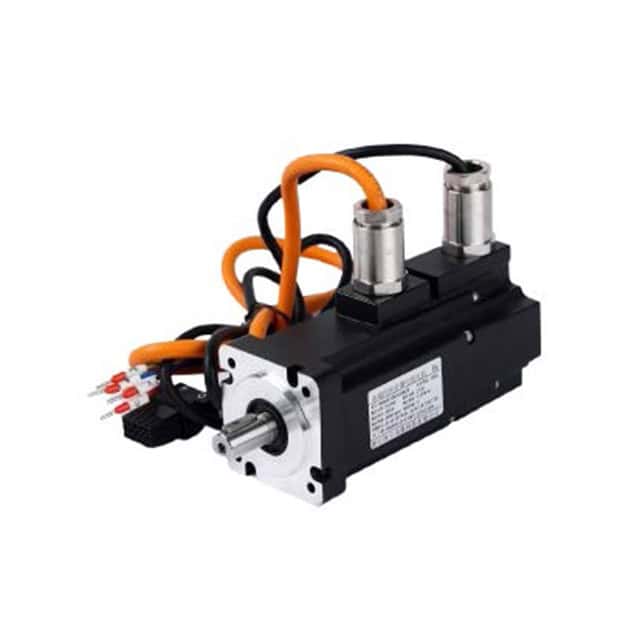
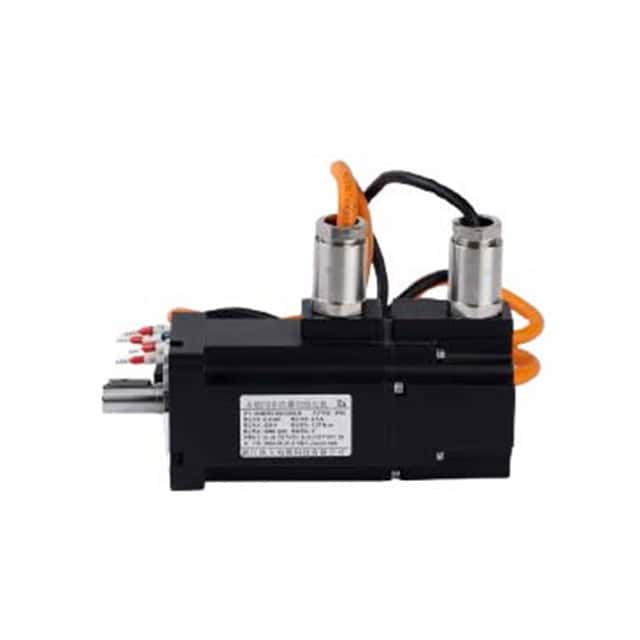
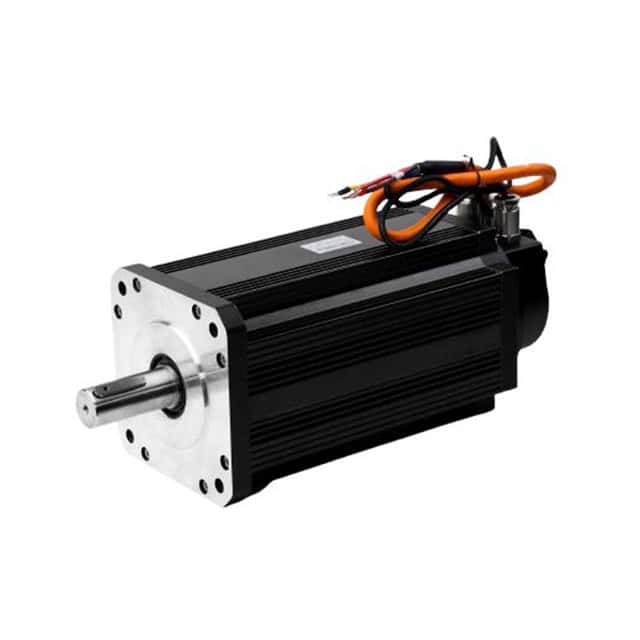
What Is an Explosion-Proof Motor?
Explosion-proof motors are used in hazardous locations where flammable gases, vapors, combustible dusts, or ignitable fibers may be present.
In these environments, motor selection goes beyond horsepower, speed, and mounting. The motor also has to match the site classification, protection method, and approval requirements. A standard industrial motor may be able to drive the load, but that does not make it suitable for a hazardous area.
That is why explosion-proof motors are commonly used in oil and gas, chemical processing, grain and feed handling, mining, paint and solvent systems, and other industrial applications where the surrounding atmosphere can create an ignition risk.
Why They Are Used
An explosion hazard exists when three things come together: a flammable material, oxygen, and an ignition source.
In many industrial processes, the first two are already part of the environment. The purpose of an explosion-proof motor is to provide a construction and protection method suitable for the classified area, so the equipment does not ignite the surrounding hazardous atmosphere under its approved conditions of use.
Depending on the application and the standard involved, that may mean containing an internal explosion, limiting surface temperature, reducing the likelihood of ignition-capable sparking, or using another approved protection concept.
This is the important distinction: an explosion-proof motor is not simply a tougher standard motor. It is a motor chosen for a specific hazardous location.
Where They Are Commonly Used
Explosion-proof motors are often used on equipment such as:
- pumps
- fans and blowers
- compressors
- conveyors
- mixers and agitators
- other rotating equipment installed in hazardous areas
Typical industries and processes include:
- oil and gas
- petrochemical processing
- chemical plants
- grain and feed handling
- paint and solvent systems
- dust-heavy processing environments
In many cases, the driven equipment itself is not unusual. What changes the motor requirement is the area where it is installed.
Start With the Area Rating
The first step in selecting an explosion-proof motor is understanding how the site is classified.
Class and Division
In North America, hazardous locations are commonly described by Class and Division.
- Class I covers flammable gases and vapors
- Class II covers combustible dust
- Class III covers ignitable fibers and flyings
The Division indicates how likely the hazardous substance is to be present.
- Division 1 means it is present during normal operation or may be expected frequently
- Division 2 means it is not normally present, but may appear under abnormal conditions
Zone System
Many international projects use the Zone system.
For gas atmospheres:
- Zone 0 means the explosive atmosphere is present continuously or for long periods
- Zone 1 means it is likely during normal operation
- Zone 2 means it is not likely during normal operation, or only appears for a short time
A motor rated for one classification is not automatically suitable for another. That is why the site rating needs to be confirmed before the motor model is selected.
It Is More Than Class or Zone
Area classification is only one part of the decision.
In practice, engineers usually also need to confirm:
- gas group or dust group
- temperature class
- ambient conditions
- enclosure and installation details
- project approval or certification requirements
Temperature class is especially important. The motor surface temperature has to remain suitable for the hazardous substance in that environment.
In practice, equipment approval and marking are tied not only to the general area classification, but also to the specific gas, vapor, dust, or fiber involved, along with the applicable group and temperature classification.
That is why marking and nameplate details matter just as much as the motor’s electrical and mechanical specification.
A Few Approval Terms You Will See
Approval requirements are not the same in every market.
Some European projects may require ATEX.
Some international projects may follow IECEx.
In the U.S. and Canada, buyers often focus on hazardous-location marking and certification aligned with North American requirements.
So while the phrase “explosion-proof motor” is widely used, the actual approval path depends on the destination market, project standard, and site requirement.
Common Protection Types
Hazardous-area motors may use different protection concepts, including:
- flameproof or explosion-proof construction
- increased safety
- pressurized or purged protection
- non-sparking concepts
- dust ignition protection
These terms come from different protection and certification systems. They should not be treated as interchangeable labels, and the required protection concept depends on the applicable standard and site classification.
What to Check Before You Specify One
A practical selection process usually starts with the site, not the catalog.
- Confirm the area classification
Identify whether the application is Class I Division 1, Class I Division 2, Zone 1, Zone 2, or a dust-related hazardous area.
- Identify the hazardous medium
Check whether the risk comes from gas, vapor, dust, or fibers, and confirm the relevant group.
- Review the temperature requirement
Make sure the motor’s temperature class is suitable for the environment.
- Check the core motor details
Once the hazardous-area requirement is clear, review the usual motor selection points:
- power
- voltage and frequency
- speed
- torque
- duty
- mounting
- shaft and flange dimensions
- enclosure level
- Confirm approval and documentation
A motor may fit the application mechanically and electrically, but still fall short if the marking, certificate route, or documentation does not match the project requirement.
Common Mistakes
One common mistake is treating any hazardous-duty motor as an explosion-proof motor. In real projects, the exact requirement depends on the classification system and approval basis.
Another mistake is focusing only on performance. A motor can be right in power and speed and still be wrong for the site.
A third is overlooking marking details. In hazardous-area applications, the nameplate is part of the engineering decision.
Final Thoughts
Choosing an explosion-proof motor is not only a sizing exercise. It is also a compliance decision.
The best place to start is the site classification, followed by the protection method, approval requirement, and then the usual electrical and mechanical details.
For hazardous-area applications, getting those points aligned early can help prevent delays later in the project.
If your application involves hazardous-area requirements, it is usually worth reviewing classification, protection method, and motor configuration early in the process.