
A small change has started to show up in our recent gate operator projects.
In the past, motor discussions usually began with voltage, torque, speed, shaft dimensions, gearbox structure and mounting. Those questions still matter, but more customers are now asking something earlier in the process:
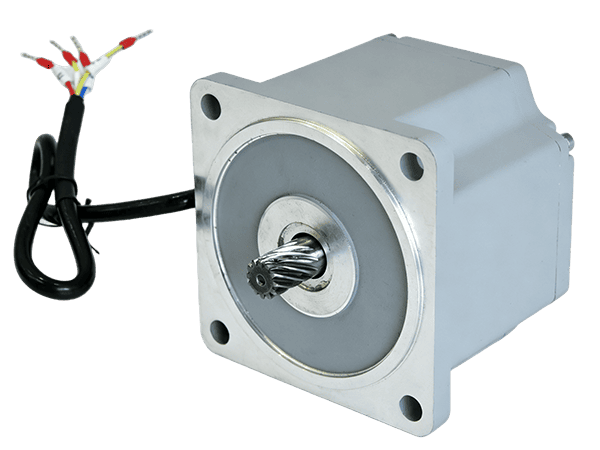
Can you provide a brushless motor option?
That does not mean brushed DC motors are disappearing from gate automation. It does suggest that some OEMs are rethinking what they expect from the drive system, especially in newer low-voltage, high-duty and electronically controlled gate platforms.
A Change We Are Starting to See
The same direction can be seen in recent products from established gate automation brands.
CAME’s FROG-X uses a 24 V brushless motor together with encoder-based speed and torque management. LiftMaster’s TECHNA barrier gate platform combines a brushless DC motor with high-cycle operation, remote diagnostics and backup power. Nice’s newer 535 Series also uses 24 V brushless motors with electronic torque control, smooth starts and stops, configurable controls and battery backup.
These products do not prove that the whole industry is replacing brushed motors. Traditional motor platforms are still widely used, and even CAME’s current gate automation range spans both traditional and brushless technologies.
But the newer brushless platforms do show where part of the market is moving: toward drive systems that are expected to do more than simply open and close a gate.
What Is Driving the Change?
One reason is service life.
Brushed DC motors rely on brushes and a commutator for mechanical commutation. Those contact surfaces wear over time. A brushless motor removes the brushes as a wear item, which can become more valuable as cycle frequency increases. In a lightly used residential gate, brush life may never be the main concern. In a busy entrance, parking facility or industrial site, reducing motor-related service interventions can matter much more.
A second reason is motion control.
Gate movement is not only about rated speed. How the system starts, accelerates, slows down and stops affects noise, mechanical stress and the overall feel of the operator.
A brushless motor paired with the right controller and feedback can give the system designer more control over torque and speed across the movement cycle. This is already visible in current gate platforms using encoder feedback, adaptive torque control and electronically managed acceleration and deceleration.
The third reason is duty cycle.
High-frequency applications place more pressure on the complete drive system. Removing brushes does not automatically solve thermal or mechanical problems, but it removes one wear mechanism and works naturally with electronic current and speed control. That makes brushless platforms attractive where frequent cycling and consistent motion are important.
There is also a broader change happening around the motor. New gate operators increasingly combine the drive with encoders, configurable control boards, battery management, diagnostics and connectivity.
Those functions are not exclusive to brushless motors. But in practice, BLDC adoption often arrives as part of the same electronic platform upgrade.
It Is More Than a Motor Swap
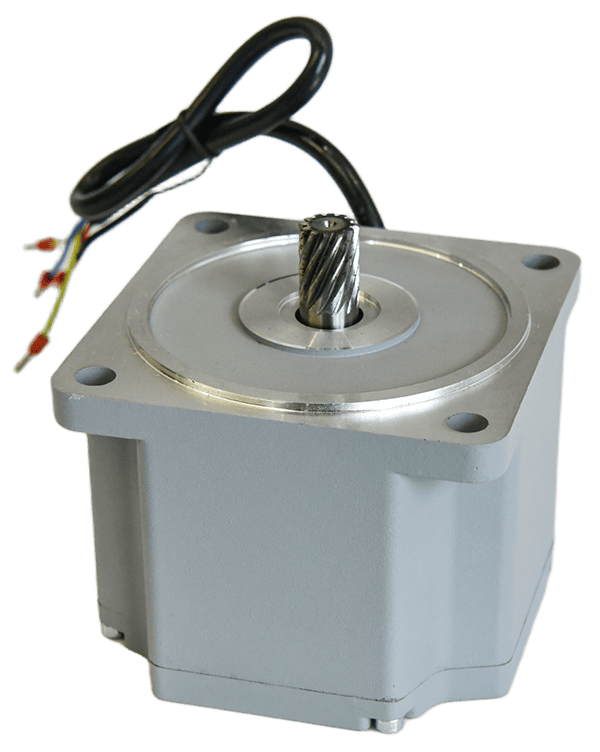
This is where a brushless conversion becomes an engineering project rather than a catalog substitution.
If an existing operator was designed around a brushed motor, matching only voltage, rated power or outer dimensions is usually not enough.
Starting torque, peak load, output speed and gearbox ratio may need to be checked again. The shaft and mounting interface still have to fit the existing mechanical structure. The controller must match the motor current and commutation method, while Hall sensors or encoder feedback may introduce new wiring and control requirements.
The gearbox matters as much as the motor. A new motor may operate at a different speed or torque range, changing the required reduction ratio and the load seen by gears, bearings and shafts.
The controller also becomes part of the motor selection because electronic commutation is required for BLDC operation.
This is why the better question is not simply:
“Can we replace this brushed motor with a brushless one?”
It is:
“What should the complete drive system look like for this gate?”
Does Brushless Always Make Sense?
No.
A brushed DC motor can still be a practical choice when cycle count is modest, the control requirement is simple and initial cost matters. AC motors also remain useful in gate and door systems where a mature, straightforward drive architecture fits the application.
Brushless systems add electronics, and that means the motor, controller and feedback method need to be matched correctly.
Even efficiency should be considered at system level rather than assumed from the motor label alone. Gearbox and controller losses also affect the final result, and the best solution depends on the actual operating point of the equipment.
So the decision should be based on the application, not on which technology sounds newer.
A Broader Drive-System Trend
What we are seeing in gate automation may be part of a wider change in motor-driven equipment.
In fans, pumps, conveyors and mobile equipment, customers are increasingly looking beyond rated motor power and asking about speed control, feedback, energy use, diagnostics and maintenance.
The exact motor technology is different from one application to another, but the direction is similar:
The motor is becoming part of a more electronically managed drive system.
For gate operator OEMs, that makes early application review increasingly important. Load, duty cycle, gearbox structure and control requirements should be aligned before the motor type is finalized.
The growing interest in brushless gate motors is therefore more than a component change. It is one sign that expectations for the entire drive system are changing.